
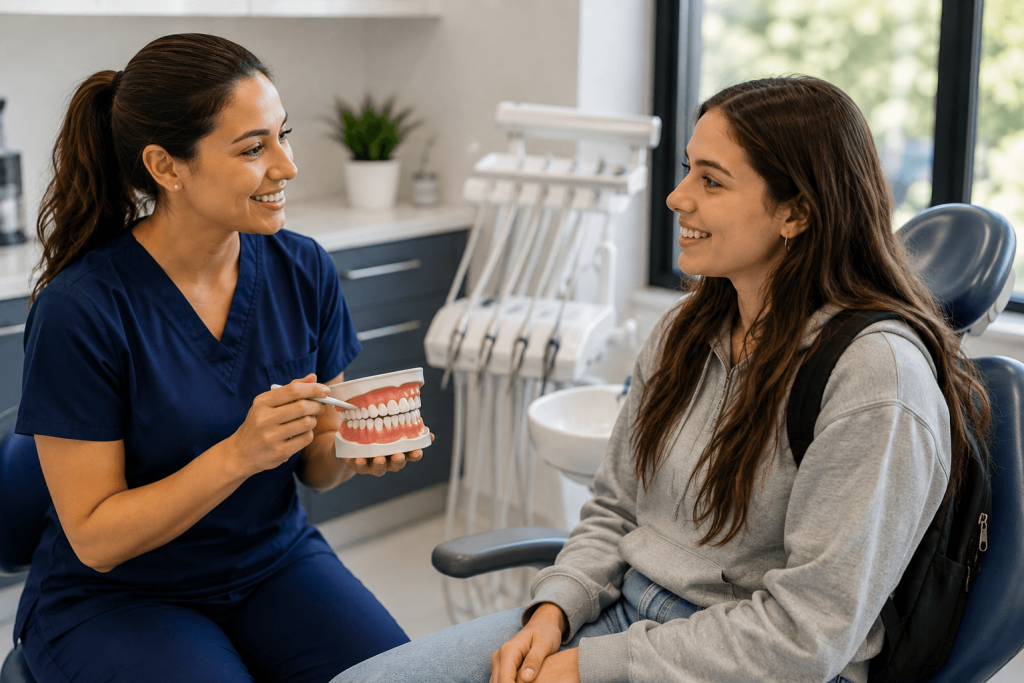
Proper back-to-school dental care helps students in London, Ontario keep their smiles healthy, avoid sudden tooth pain during exams, and establish an easy routine.
Students can prepare for the school year by keeping a consistent home-care routine, arranging preventive dental care according to their individual needs, and dealing with symptoms early. Tooth pain, swelling or an injury should prompt a dental call rather than waiting for a school break.
These practical steps can make oral care easier during early classes, long commutes, residence life, sports and exam periods.
Quick Takeaways for Students:
Schedule early: Book routine cleanings or address tooth sensitivity before classes start.
Build a travel kit: Keep a toothbrush, fluoride toothpaste, and floss in your backpack for long campus days.
Protect your teeth: Wear a fitted mouthguard for contact sports and don’t delay care if you experience severe pain or swelling.
What Dental Care Should Students Handle Before School Starts?
Before classes begin, check for current symptoms, replace worn oral-care supplies, prepare a portable kit and consider whether a cleaning or exam is due based on your dentist’s recommendations and your own oral health needs.
Use this quick checklist before the term starts:
- Pay attention to tooth pain, sensitivity, bleeding gums, jaw discomfort, mouth sores or other changes that have not settled.
- Replace a worn or frayed toothbrush or electric brush head.
- Restock fluoride toothpaste, floss or another interdental cleaner and pack a small oral-care kit.
- Check whether your dentist has recommended a follow-up, cleaning or ongoing treatment.
- If you wear a retainer, mouthguard or another dental appliance, look for cracks, poor fit or signs of wear.
Back-to-school is a useful reminder, not a universal deadline. A student with no symptoms and a recent exam may have different needs from someone with sensitivity, braces or gum concerns. If unsure, ask when your next visit should be.
Why Can a Dental Checkup Help Before Classes Get Busy?
A checkup before a busy term can provide a convenient opportunity to assess the teeth and gums, remove plaque and hardened tartar, discuss symptoms and identify concerns that may require monitoring or treatment. It cannot guarantee a problem-free semester.
United Dentistry’s page on teeth cleanings in London explains that a cleaning may include a gum-health check, plaque and tartar removal, polishing and a dentist’s exam. Professional cleaning addresses buildup that brushing and flossing may not remove, especially around the gumline.
The examination is also a chance to mention sensitivity, bleeding gums, discomfort when chewing or changes in an appliance. There is no single schedule for everyone. Exam frequency depends on oral health, home care, dental history and how quickly tartar builds up.
How Can Students Keep Their Teeth Healthy During Busy School Days?
A realistic student dental-care routine centres on brushing twice a day with fluoride toothpaste, cleaning between the teeth daily and keeping basic supplies accessible. Consistency matters more than building a complicated routine that is difficult to maintain.
These daily habits can be adapted to different student schedules:
- Anchor brushing to predictable parts of the day. Brush after waking and again before bed, even when class or work hours change.
- Clean between the teeth daily. Floss is one option. If braces, dexterity issues or wider spaces make flossing difficult, ask a dental professional about a suitable alternative.
- Keep a backup routine. A travel toothbrush, toothpaste and floss can help after an overnight stay, a late study session or a long day away from home.
- Choose water regularly. A reusable water bottle is practical for lectures, commutes and practices.
- Mention persistent dry mouth. Hydration may help occasional dryness, but ongoing symptoms deserve professional advice.
A portable kit can fit in a ventilated case. Sugar-free gum may be convenient, but it does not replace brushing or flossing.
Which Snacks and Drinks Are Better for Student Oral Health?
Frequent exposure to sugary foods and drinks can raise the risk of tooth decay because oral bacteria use sugars to produce acids that affect tooth enamel. Reducing how often teeth are exposed can be as relevant as the amount consumed.
Long lectures and study sessions can lead to frequent snacking or sipping. Instead of labelling foods as “good” or “bad,” try a few practical adjustments:
- Choose water more often than pop, energy drinks, sports drinks or sweetened coffee and tea.
- When possible, have sweet foods or drinks with a meal instead of repeatedly throughout the day.
- Pack balanced options such as cheese, plain yogurt, vegetables or nuts when they are safe and permitted.
- Avoid holding or swishing sugary or acidic drinks around the mouth.
Food choices are only one part of cavity risk. Saliva, fluoride, oral-care habits and health history can also matter.
What Should Student Athletes Know About Mouthguards and Dental Injuries?
Students in sports with a risk of contact, falls or impact to the face should consider appropriate mouth, face and head protection. A properly fitted mouthguard may reduce orofacial injuries, but a mouthguard should not be treated as concussion-proof protection.
Hockey, football, rugby, basketball, soccer and baseball are among the activities that may involve facial trauma, but risk also depends on the athlete’s position, level of contact and sport-specific rules. Mouthguards are one part of protection and do not replace other sport-specific safety equipment.
Fit matters. A loose or damaged mouthguard may not stay correctly positioned. Students with braces should ask a dental or orthodontic provider about a suitable option.
If a tooth is broken, loosened or knocked out, stop playing and seek prompt guidance. United Dentistry provides information about dental emergencies in London, including damaged and knocked-out teeth.
When Should Students Call a Dentist Instead of Waiting?
Call a dentist promptly for persistent, severe or worsening tooth pain, swelling, a broken or knocked-out tooth, uncontrolled oral bleeding or a concerning mouth injury. Do not wait for reading week or the end of exams when symptoms are worsening.
Dental symptoms that deserve a prompt call include:
- Pain that is severe, worsening, interrupting sleep or making it difficult to eat
- Increasing swelling of the gums, face or jaw
- A broken, cracked, loose or knocked-out permanent tooth
- Bleeding from the mouth that does not settle with firm, gentle pressure
- A pimple-like bump on the gum, drainage, a bad taste or other possible signs of infection
- A sports or fall-related injury involving the teeth, jaws or mouth
- A lost filling or crown that causes pain, sharp edges or difficulty eating
Some situations require medical emergency care rather than a routine dental call. Call 911 for difficulty breathing, loss of consciousness or another immediately life-threatening problem. Go to an emergency department for serious head or facial trauma, difficulty swallowing, rapidly spreading facial or neck swelling, or heavy bleeding that will not stop.
If you are uncertain about urgency, describe the symptoms and injury clearly when you call. Rapidly worsening medical symptoms should not wait for a dental appointment.
What Do Students Often Ask About Back-to-School Dental Care?
Students commonly ask about visit frequency, the timing of cleanings, portable supplies, urgent symptoms and sports mouthguards. The right answer often depends on current oral health, dental history, symptoms, activities and recommendations from a dental professional.
How Often Should Students Visit a Dentist?
Students should follow a visit schedule based on their oral health, history and dentist’s recommendations. Some people need more frequent monitoring, while others may be advised to return less often. New pain, swelling or injury should not wait for the next routine visit.
Should Students Get a Dental Cleaning Before School Starts?
A cleaning before school can be convenient if a student is due or has been advised to book one, but it is not a universal requirement. Back-to-school timing may make planning easier before classes, work and activities become busy.
What Should a Student Keep in a Portable Dental-Care Kit?
A simple kit can include a travel toothbrush, fluoride toothpaste, floss or another recommended interdental cleaner and a clean, ventilated case. Students with braces may also carry orthodontic wax if their provider has recommended it. Replace used or worn supplies as needed.
When Should a Student Treat Tooth Pain as Urgent?
Tooth pain needs prompt dental guidance when it is severe, persistent, worsening, disturbing sleep or accompanied by swelling, fever, drainage or an injury. Difficulty breathing, difficulty swallowing or rapidly spreading swelling requires emergency medical assessment.
Do Student Athletes Need a Mouthguard?
A mouthguard may be appropriate when a sport carries a risk of contact, falls or impact to the face. The type and fit should suit the activity and the athlete’s dental needs. Mouthguards should not be described as concussion-proof protection.
How Can United Dentistry Support Students in London?
United Dentistry is a dental practice at 590 Oxford St E in London, Ontario, offering teeth cleaning, general dentistry and emergency dental care. Care recommendations are based on an assessment rather than a one-size-fits-all student schedule.
The clinic’s general dentistry in London page outlines preventive and restorative services, while its cleaning and emergency pages address those specific needs.
The phrase “student dentist” can mean a dentist in training. Students seeking care in London can instead look for a dental clinic that explains recommendations clearly and addresses their individual needs.
If you would like to ask about a cleaning, exam or urgent dental concern, contact United Dentistry. The team can discuss your concern and the appropriate next steps without assuming that every student needs the same care or visit frequency.