
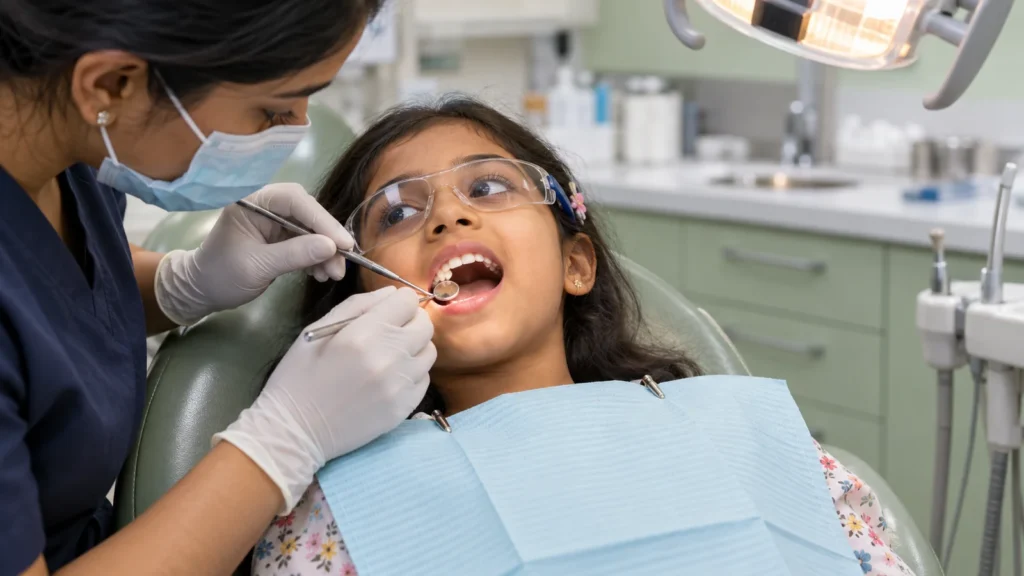
Dental sealants are thin protective coatings placed over the grooves of back teeth. They create a smoother surface that makes it harder for food and plaque to settle into the deep pits where cavities often begin. Sealants are most often considered for permanent molars after they come into the mouth.
They are one part of preventive care, not a replacement for brushing, flossing, fluoride or regular dental visits. A family dentist in North London can examine a child’s teeth, consider their cavity risk and explain whether sealing particular teeth may be useful.
What are dental sealants?
The chewing surfaces of molars are not naturally flat. They contain narrow grooves and pits that help grind food. Some of those spaces are deep enough that toothbrush bristles cannot clean them completely, even when a child brushes carefully.
A dental sealant is a clear or tooth-coloured material that flows into those grooves and hardens over the surface. It does not cover the whole tooth like a crown. Instead, it forms a barrier over the areas most likely to trap food and bacteria.
The Government of Canada’s oral-health guidance for children describes sealants as a covering placed on the chewing surfaces of permanent teeth and notes that they can be applied as soon as those teeth come into the mouth. The timing still depends on the individual tooth and the dentist’s assessment.
Parents exploring children’s dental care in London can ask about sealants during a routine examination. The conversation should include which teeth are being considered, why they may benefit and how the sealants will be checked later.
Why are children’s back teeth vulnerable to cavities?
New permanent molars can be difficult for children to reach. They sit far back in the mouth, and their uneven chewing surfaces hold onto plaque more readily than smooth front surfaces. Children are also still developing the coordination and consistency needed for thorough brushing.
That does not mean a cavity is inevitable or that poor brushing is always to blame. Tooth shape, diet, fluoride exposure, past decay and day-to-day oral hygiene all affect risk. A sealant addresses one part of that picture by protecting the grooves on selected teeth.
Sealants do not protect every surface. Cavities can still develop between teeth, near the gumline or anywhere plaque remains. Children still need help building reliable brushing and flossing habits.
Which children and teeth may benefit from sealants?
Sealants are commonly discussed when permanent molars have emerged enough to keep the tooth clean and dry during application. A dentist may pay particular attention to teeth with deep pits and fissures or to a child with factors that increase cavity risk.
The assessment may consider:
- whether the permanent molar has fully or partly erupted
- how deep and narrow its grooves are
- whether the tooth can be kept dry long enough to place the material
- the child’s past and current cavity experience
- how easily the child can clean the back teeth
- whether the tooth already has decay, a filling or another concern
Not every child needs sealants on every back tooth. The recommendation may also change as new permanent teeth appear. An examination is more useful than choosing sealants based only on age or on what another child received.
What happens when dental sealants are applied?
Applying a sealant is usually a short, non-surgical procedure. When the tooth is healthy and does not need other treatment, the process generally does not require drilling or freezing.
The usual steps are:
- The tooth is cleaned so plaque and debris do not remain in the grooves.
- The tooth is isolated and dried. Moisture control matters because the material must bond to the enamel.
- A conditioning material is placed briefly on the chewing surface, then rinsed away.
- The tooth is dried again and the sealant is brushed into the grooves.
- A curing light may be used to harden the material.
- The dentist checks the coverage and the child’s bite.
A child may notice that the tooth feels slightly different at first. The dental team should check the bite before the visit ends and explain any instructions that apply to the material used.
Keeping the tooth dry is often the most demanding part for a younger child. Let the team know about anxiety, sensory concerns or difficulty keeping the mouth open so the appointment can be explained in an age-appropriate way.
Dental sealants and fluoride protect teeth in different ways
Sealants create a physical barrier over the pits and grooves of a tooth. Fluoride helps strengthen enamel and make it more resistant to acid attacks. Because they work differently, a dentist may discuss both rather than treating them as competing choices.
United Dentistry’s information about fluoride treatment and dental sealants explains how the two preventive approaches may be used as part of a broader oral-care plan. The appropriate combination depends on the child’s teeth, risk factors and professional assessment.
Fluoride toothpaste at home remains important even when a child has sealants. Follow age-appropriate guidance from the child’s dental team and avoid adding fluoride products or supplements without professional advice.
Do sealants replace brushing, flossing or cleanings?
No. A sealed molar still needs to be brushed, and the rest of the mouth remains exposed to plaque and food. Sealants cannot clean between teeth, protect the gumline or replace an examination.
A practical routine still includes:
- brushing twice daily with an age-appropriate amount of fluoride toothpaste
- helping or supervising until the child can clean every area reliably
- flossing where neighbouring teeth touch
- keeping sugary snacks and drinks from becoming frequent all-day exposures
- attending recommended examinations and children’s dental cleanings
The dentist or hygienist can also show the child how to reach the back molars and point out areas that need more attention. Sealants are most useful when they reinforce, rather than replace, those habits.
How long do sealants last and how are they checked?
Dental sealants may remain protective for several years, but their condition can change as a child chews and the teeth develop. A sealant can wear thin, chip or come away from part of the groove without causing obvious symptoms.
During regular visits, the dental team can look for complete coverage and check whether the material is still firmly attached. A worn area may be repaired or resealed when appropriate. The need for maintenance is one reason not to treat sealants as a one-time substitute for ongoing care.
Call the dental office if a child reports a sharp edge, a change in the way the teeth meet or discomfort that does not settle. Those symptoms do not automatically mean the sealant has failed, but they deserve professional advice.
Are dental sealants safe?
Parents sometimes ask about the materials used in resin-based sealants, including bisphenol A, or BPA. The Canadian Dental Association states that sealants provide strong protection against cavities and that most products do not release BPA. It also notes that Health Canada does not place special restrictions on dental materials containing BPA because exposure is within established safety limits.
Product choice can vary. Ask which material the clinic plans to use, what benefits and limitations apply and whether there are alternatives if your child has a known allergy or another relevant health concern. That conversation should be based on the child’s needs, not on fear created by an ingredient name alone.
Frequently asked questions about dental sealants
Which teeth are usually sealed?
Sealants are most often placed on the chewing surfaces of permanent molars because those teeth commonly have deep pits and grooves. Premolars or other teeth may be considered when their shape and cavity risk make sealing useful. The dentist should identify the exact teeth being recommended.
What age should a child get dental sealants?
The timing is based more on tooth eruption than on a specific birthday. A family dentist may discuss sealants after permanent molars emerge and can be kept dry for application. Because children develop at different rates, the appropriate visit and teeth should be confirmed through an examination.
Can a child eat after sealants are applied?
Many light-cured sealants harden before the appointment ends, but instructions can vary by material and by any other care completed at the visit. Follow the dental team’s directions about eating, chewing and brushing rather than relying on a universal waiting time.
What happens if a sealant chips or wears down?
A dentist can examine the remaining material and decide whether it should be repaired, replaced or monitored. Do not try to smooth or remove it at home. Mention any rough edge, bite change or discomfort when you contact the office.
Can a sealed tooth still develop a cavity?
Yes. A sealant lowers risk on the covered grooves but cannot protect every surface or guarantee that decay will never occur. Plaque can still collect between teeth and around the gumline, and a worn sealant may need attention. Regular home care and dental examinations remain necessary.
Ask United Dentistry About Dental Sealants for Your Child
If your child’s permanent molars are coming in, ask the dental team to show you which teeth have deep grooves and whether sealants may be appropriate. A useful recommendation should explain the child’s individual risk, the teeth involved, what the application includes and how the material will be monitored.
United Dentistry provides family and children’s dental care from its North London clinic near Oxford Street East and Adelaide Street North. You can contact United Dentistry to ask about a preventive appointment and whether dental sealants should be discussed for your child.
Sealants are a focused preventive tool. Used alongside fluoride, effective home care and regular dental visits, they can help protect the vulnerable chewing surfaces of selected teeth while a child builds habits for long-term oral health.